Track day panning: the camera settings that actually work
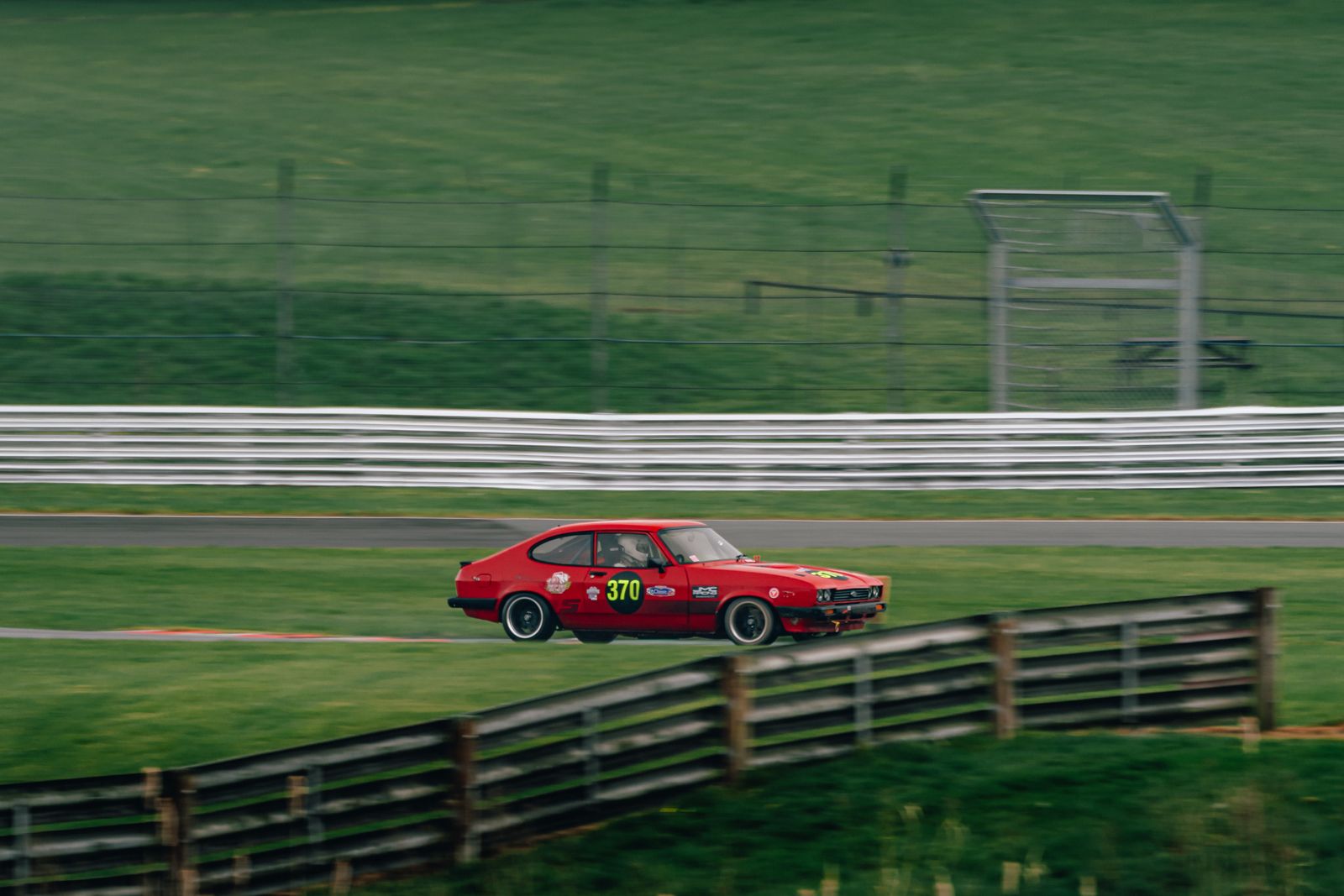
A frozen race car looks parked. Panning is how you show speed: you swing the camera with the car at a slow shutter speed, so the car stays sharp and everything behind it streaks. It is also the technique that throws away the most frames. Here are the settings I start from at a circuit, and how to cope with the hit rate.
Shutter speed: start safe, then slow down
Shutter speed is the whole game. Too fast and the background and wheels freeze. Too slow and the car goes soft with the background.
| Shutter | What you get | Hit rate |
|---|---|---|
| 1/250 | Wheels just starting to turn, background lightly blurred | High: a good place to warm up |
| 1/125 | Clear motion in the background and wheels | Medium |
| 1/60 | Strong streaks, a real sense of speed | Low: lots of soft frames |
| 1/30 and below | Dramatic, painterly | Very low: a handful of keepers a session |
Faster cars and longer lenses need a faster shutter for the same hit rate. Slow corners and hairpins let you go slower. Start each session at 1/250, check a few frames, then step down once your swing is smooth.
Camera settings
- Shutter priority (Tv or S) with Auto ISO. You fix the shutter speed; the camera picks the rest. In bright sun at 1/60 you may end up at a small aperture like f/16. That's fine for a pan, but check for sensor dust spots in the sky afterwards.
- Continuous autofocus (AI Servo or AF-C), with a zone or tracking area rather than a single point. Start tracking the car early, before you press the shutter.
- Stabiliser in panning mode (often “Mode 2”) if your lens has one. It steadies the up-and-down shake but lets you swing sideways.
- High-speed burst, short bursts. Fire through the moment, not the whole straight. Three to six frames per pass is plenty, and your evening will thank you.
Technique: swing from the hips
- Pick your spot first. Choose where the car will be when you shoot (a corner exit, a kerb, a gap in the barrier) and point your feet at it.
- Twist, don't walk. Plant your feet, then rotate from the hips to pick the car up early. Your whole upper body turns as one, like a door on a hinge.
- Follow through. Keep swinging after the shutter closes. Stopping at the click is the most common cause of a soft pan.
- Choose cars crossing you. A car moving across the frame pans well. One coming straight at you barely moves across the sensor, so freeze it instead.
Expect a low hit rate (and plan for it)
At 1/60 even experienced motorsport photographers bin most frames. That isn't failure: it's the cost of the shot. The problem is the next step. A day of slow pans leaves thousands of near-identical frames, and the keepers are the ones where the car is sharp while everything else is blurred.
That is exactly where normal culling goes wrong, by eye or by software. A frame that is mostly blurred looks “soft” at a glance. Judge sharpness on the car instead: the badge, the number, the driver’s helmet. More on that in how to tell if a photo is sharp and how to cull burst photos.
Vantage was built for this. It measures focus on the car itself, so a good pan isn’t marked down for its blurred background, and it puts the sharpest frame of each burst first. On a 2,600-photo test shoot it took about 20 minutes (the full timings). There's a 14-day free trial with no card if you want to try it on your next track day.
Try it on your next shoot
Vantage runs on your own Mac or PC — your originals never leave your machine unless you choose to back them up. Free to start, and it’s in beta, so you’ll be shaping it.
Download Vantage See pricingCommon questions
What shutter speed should I use for panning a race car?
Start at 1/250 for a high hit rate, then step down to 1/125 or 1/60 for more motion blur once your swing is smooth. Slower corners allow slower speeds; faster cars and longer lenses need faster ones.
Should I use image stabilisation when panning?
Yes, if your lens has a panning mode (often called Mode 2). It steadies vertical shake while letting you swing horizontally.
Why are most of my panning shots blurry?
Slow shutter speeds trade hit rate for drama. At 1/60 most frames will be soft even with good technique, which is why you shoot short bursts and judge sharpness on the car, not the background.