How to cull a trackday: two thousand panning shots, one afternoon
A day at a circuit produces more frames than any other kind of shoot I do, and the least variety. Twenty cars, six sessions, the same four corners. You come home with two or three thousand images in which roughly the same thing happens two or three thousand times.
It is also the shoot where generic culling tools do the most damage, for one specific reason.
Panning breaks sharpness scoring
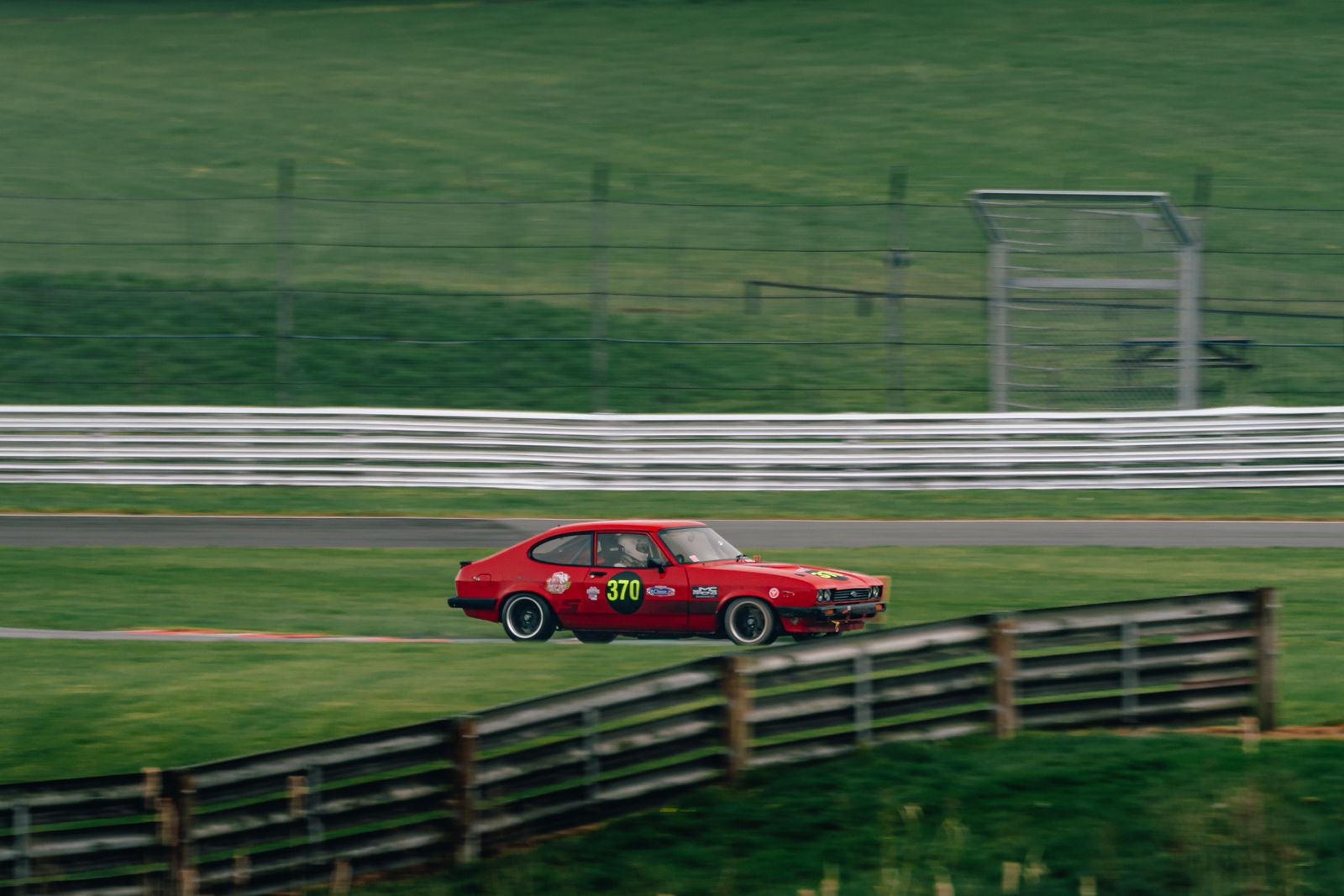
Shoot a car at 1/125 while tracking it and you get a sharp car against a smeared background. That’s the shot. It’s the entire craft of the discipline.
Now run that frame through a culling tool that scores overall image sharpness. Most of the pixels are motion-blurred grass. The tool sees a soft image and marks it down. Meanwhile the frame next to it — where you panned badly, the car is soft and the background is accidentally sharp because you slowed down — scores higher. The scoring is precisely inverted from what you want.
This is why a lot of photographers try AI culling once on a motorsport set, watch it reject their best pans, and never open it again. The tool wasn’t broken. It was answering a different question.
The judgement you need isn’t “is this frame sharp?” It’s “is the car sharp while the background moves?”
What actually separates a keeper at a circuit
- Subject sharpness in isolation. Sharpness measured on the car, not the frame. A good pan should show high detail on the car and low detail everywhere else — that contrast is a positive signal, not a negative one.
- Where the car is in the frame. Room ahead of the nose reads as speed; the same car jammed against the leading edge reads as a mistake.
- Wheels turning. A completely frozen wheel on a moving car looks wrong. Some rotational blur in the spokes is the difference between motion and a car parked on a racing line.
- Whether the driver is visible. A helmet through the side window sells the frame — and sells prints to the driver.
- Clean of marshals, cones and fencing. Catch fence across the nose ruins an otherwise perfect frame, and at thumbnail size you will not see it.
Why you end up with so many frames
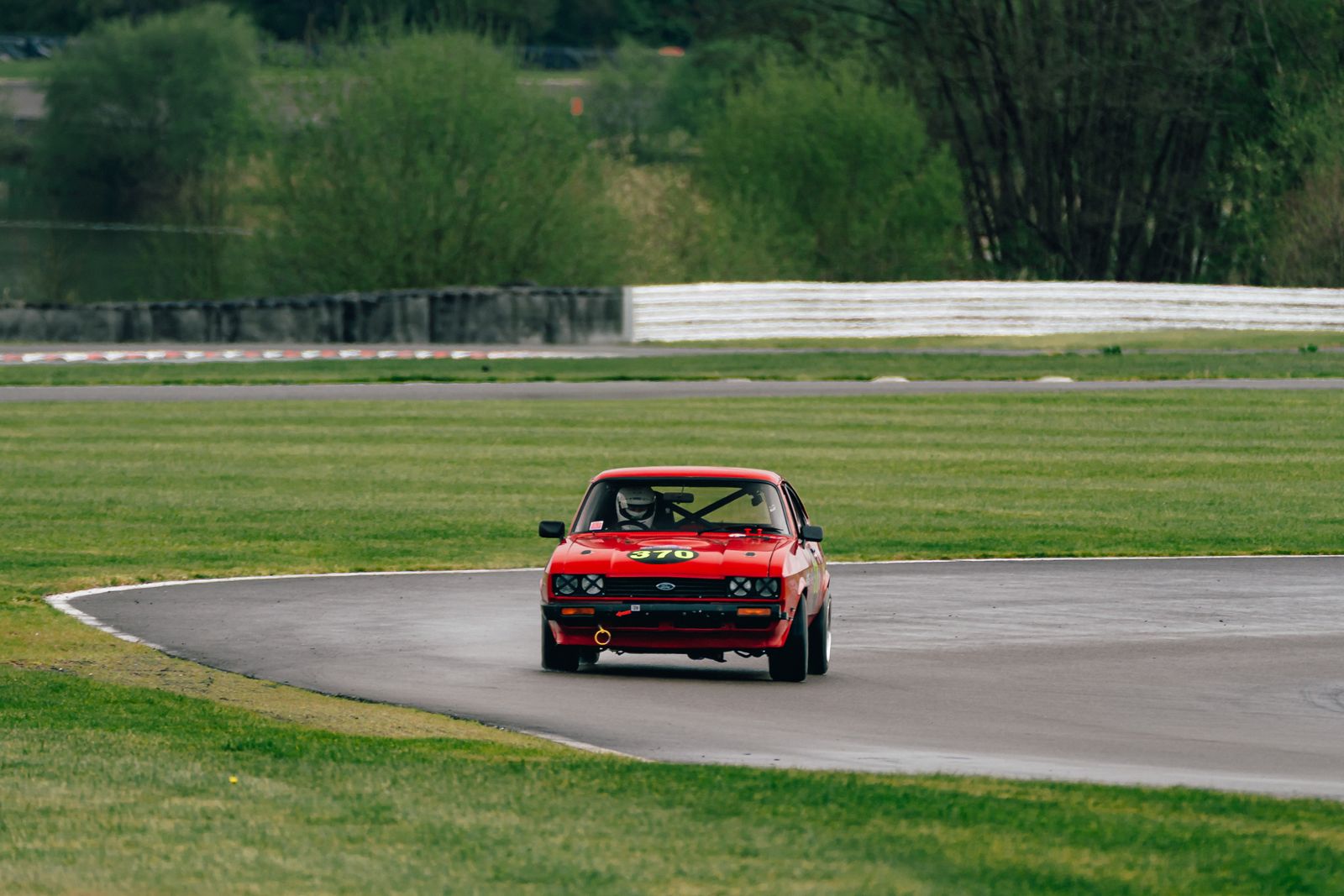
The maths of a trackday is unforgiving. A saloon field is maybe twenty cars. Each session, each car passes your corner perhaps eight times. Fire a short burst of four or five frames on each pass — which you must, because you cannot know which one has the wheel position and the head angle you want — and one session at one corner is already six or seven hundred frames.
Move to a second corner for the afternoon sessions and you are comfortably past two thousand. None of that is over-shooting. It is the correct way to work a circuit, and it produces a culling problem by design.
The shutter speed trade-off, and what it means for your cull
Roughly: 1/500 and above freezes everything, including the wheels, so the car looks parked. Around 1/250 you get some spoke rotation with a forgiving hit rate. Down at 1/125 and below the background properly streaks and the wheels spin convincingly — and your hit rate collapses, because now any hand movement shows.
The practical consequence is that the slower you shoot, the more frames you must take and the more brutal your cull has to be. A session shot at 1/80 might yield two keepers out of forty. Those two will be your best images of the day.
A workable order of operations
- Split by car before anything else. Your buyers are individual owners and teams. A set organised by car is sellable; a set organised by time is a chore to sell from. Do this first and everything after is easier.
- Collapse each pass into one hero. Twelve frames of the same car through the same corner in the same session is one usable image. Pick the best and set the rest aside — don't delete them, you may want a sequence later.
- Judge sharpness at 100%, on the car only. This is the step that takes the time, and it's the step worth automating. Zooming into two thousand frames by hand is where the afternoon goes.
- Keep a spread of corners. It's easy to end up with forty frames from the one corner you liked standing at. Owners want variety across a lap.
- Grade per session, not per frame. Light at a circuit changes slowly. One grade per session usually holds, which makes delivery fast.
Turning a trackday into sales
The reason to cull fast isn’t tidiness, it’s that motorsport photos have a short shelf life. Drivers want their images that evening, while they’re still buzzing about the day. Get a gallery to an owner the same night and they buy. Send it four days later and they’ve moved on.
Which means the real target isn’t a perfect cull — it’s a good cull, grouped by car, delivered before bedtime.
What owners actually buy
After a few events you notice the pattern in what sells, and it is not always your favourite frame:
- Their car, obviously. Nobody buys a great photograph of someone else’s car. Hence grouping by car first.
- Driver visible. A helmet in the window turns a photo of a car into a photo of them driving.
- Recognisable corner. Regulars know the circuit. A shot that’s identifiably Cascades or Druids means more than a generic bit of track.
- Something happening. Opposite lock, a wheel over a kerb, two cars close together, brake discs glowing. Drama sells better than technical perfection.
- One clean side profile. Unglamorous, but it’s the one they print for the garage wall.
Where Vantage fits
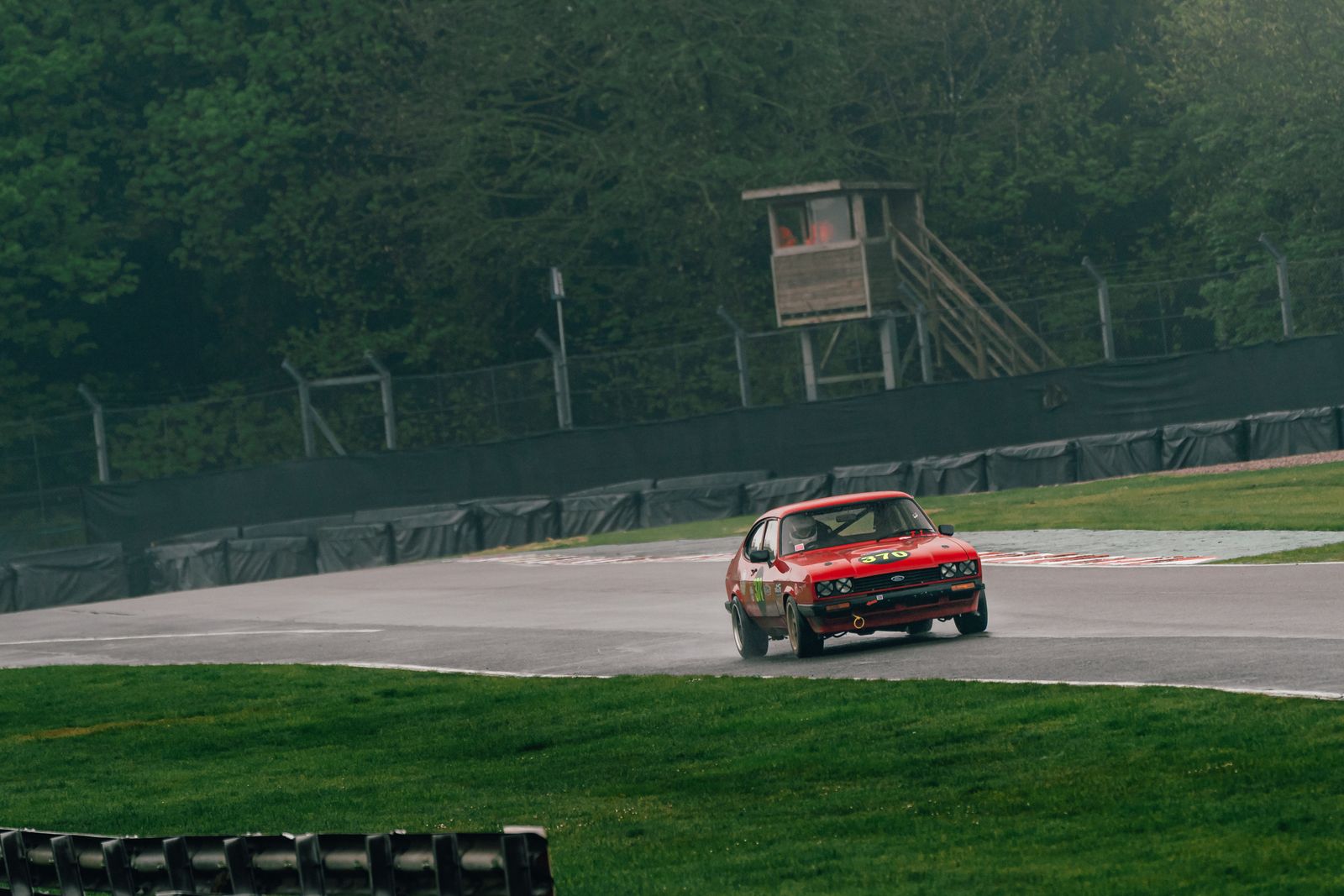
The Capri frames on this page are my own, from Oulton Park, and they’re part of what Vantage is trained on. It scores subject sharpness rather than whole-frame sharpness, so a well-executed pan isn’t punished for its blurred background; it collapses repeated passes into one hero per group; and it builds a client gallery you can send the same evening.
Vantage is in beta, and motorsport is a demanding case — a pan that’s half a stop off, or a car half-hidden behind fencing, can still be scored generously. Treat it as a very fast first pass that gets you from two thousand frames to a couple of hundred worth looking at properly.
Try it on your next shoot
Vantage runs on your own Mac or PC — your originals never leave your machine unless you choose to back them up. Free to start, and it’s in beta, so you’ll be shaping it.
Download Vantage See pricingCommon questions
Will AI culling reject my panning shots?
Tools that score sharpness across the whole frame often do, because most of a good pan is deliberately blurred. Look for culling that scores the subject separately from the background — that distinction is the whole game in motorsport.
How do I organise a trackday shoot by car?
Group by car first, before you judge quality. Owners and teams buy their own car, so a per-car set is what you actually sell from. Culling inside each car's group is then quick, because you're comparing like with like.
How fast does delivery need to be for motorsport?
Same evening if you can manage it. Drivers buy while the day is still fresh; interest drops off sharply after a couple of days. That's the real argument for a fast cull.